Back

ESCUTCHEON TILE 03

£22

Source origin
250 St Vincent Street, Glasgow (G2 5SH)
GSA Reid Building Metal Workshop


Materials
Earthenware clay with reclaimed stone powder and fragments from 250 St Vincent Street, combined with metal filings and dust recovered from the Reid Building workshop.

50% earthenware clay
40% crushed stone powder
10% reclaimed metal filings and dust

Finish
Transparent glaze mixed with reclaimed stone powder.

ESCUTCHEON TILE 03

£22

Source origin
250 St Vincent Street, Glasgow (G2 5SH)
GSA Reid Building Metal Workshop


Materials
Earthenware clay with reclaimed stone powder and fragments from 250 St Vincent Street, combined with metal filings and dust recovered from the Reid Building workshop.

50% earthenware clay
40% crushed stone powder
10% reclaimed metal filings and dust

Finish
Transparent glaze mixed with reclaimed stone powder.

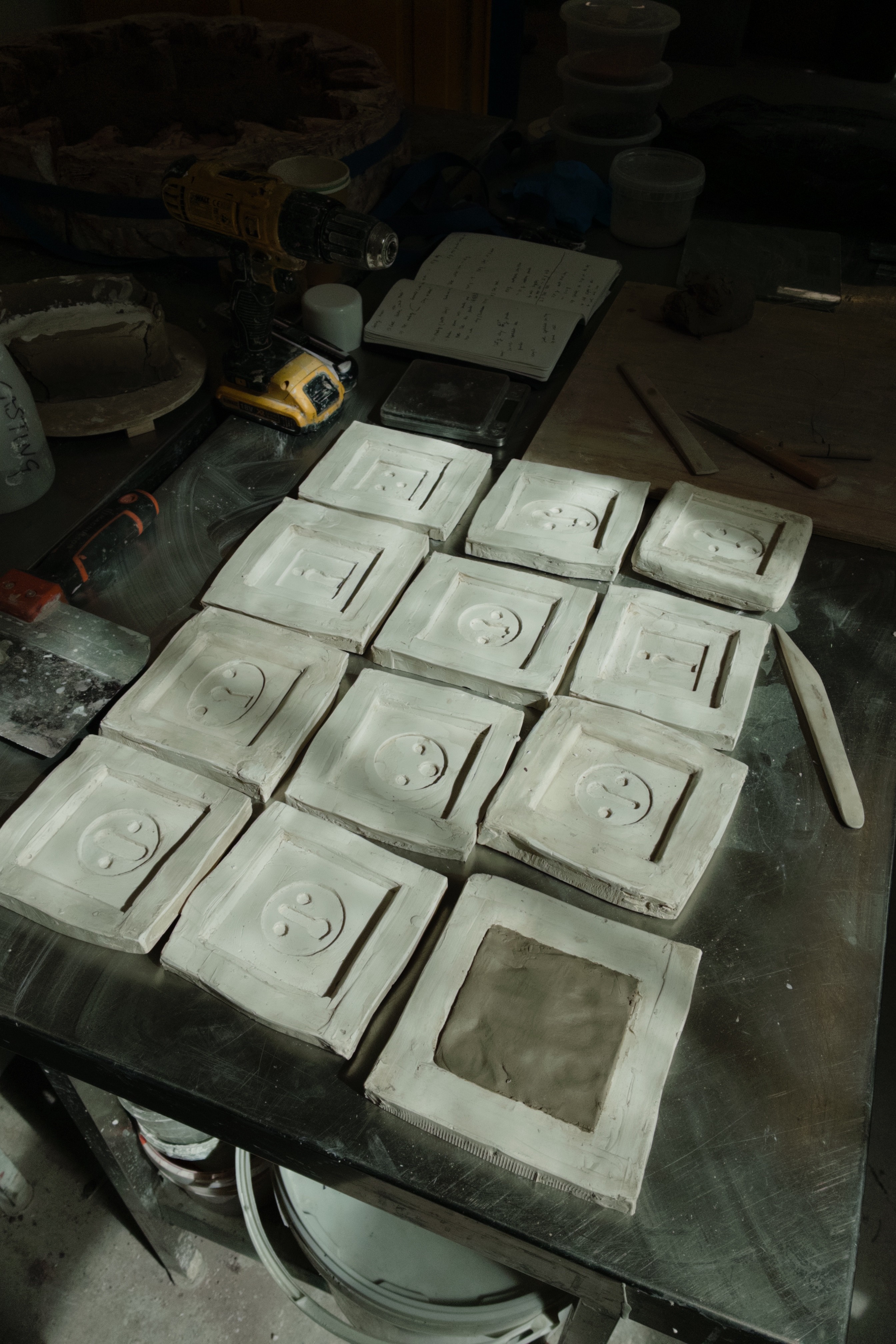
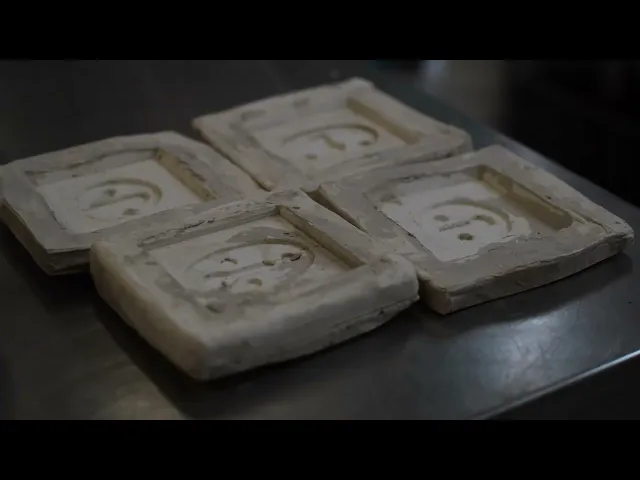
The Tile Series is inspired by escutcheons found in old Glasgow tenements. Once the cover and screws are removed, a small face-like form appears. Recast in ceramic, these hidden details return with warmth, character and a quiet sense of play.

From place to object

250 St Vincent Street is a Category B listed building in Glasgow city centre. Designed by James Thomson around 1882, it was originally built as a former hotel and later adapted for commercial use.

For the Lum Series and the Escutcheon Tiles Series, fragments of exterior stone from this construction site were collected, ground down, and mixed into clay. This material became the key source for the ceramic objects, linking each piece back to a specific building, postcode, and moment of change in the city.

Material with a past

This object carries material recovered from 250 St Vincent Street, Glasgow. Its postcode and individual piece number connect the finished form to the building and place it came from.

Stone recovered from the site is broken into fragments and powder before being introduced into the clay and glaze. After firing, traces of the original building remain visible across the object’s surface.

Material with a past

This object carries material recovered from 250 St Vincent Street, Glasgow. Its postcode and individual piece number connect the finished form to the building and place it came from.

Stone recovered from the site is broken into fragments and powder before being introduced into the clay and glaze. After firing, traces of the original building remain visible across the object’s surface.

Made with care

Each tile piece is press-moulded, finished and glazed by hand. Variations in the reclaimed material make every surface and object slightly different.

Packed With Its Story

The packaging stays quiet on the outside and more vivid within, reflecting how Glasgow can feel muted at first yet full of character beneath the surface. Natural tones sit within the project’s material palette, while die-cut openings reveal stronger colour beneath. Blind embossing and debossing draw on details from older Glasgow objects, bringing texture and depth to the packaging.

Made with care

Each tile piece is press-moulded, finished and glazed by hand. Variations in the reclaimed material make every surface and object slightly different.

Packed With Its Story

The packaging stays quiet on the outside and more vivid within, reflecting how Glasgow can feel muted at first yet full of character beneath the surface. Natural tones sit within the project’s material palette, while die-cut openings reveal stronger colour beneath. Blind embossing and debossing draw on details from older Glasgow objects, bringing texture and depth to the packaging.

Create a free website with Framer, the website builder loved by startups, designers and agencies.