
Back

LUM 02 - A
£55
Source origin
250 St Vincent Street, Glasgow (G2 5SH)
Materials
Earthenware clay with reclaimed stone powder
and fragments from the original building
50% earthenware clay
30% crushed stone powder
20% stone fragments
Finish
Transparent glaze mixed with reclaimed stone powder and iron oxide.


The LUM Series begins with chimney forms found across Glasgow rooftops. Reworked as modular ceramic pieces, each form can be stacked, rearranged and interpreted in different ways.

From place to object
250 St Vincent Street is a Category B listed building in Glasgow city centre. Designed by James Thomson around 1882, it was originally built as a former hotel and later adapted for commercial use.
For the Lum Series and the Escutcheon Tiles Series, fragments of exterior stone from this construction site were collected, ground down, and mixed into clay. This material became the key source for the ceramic objects, linking each piece back to a specific building, postcode, and moment of change in the city.


Material with a past
This object carries material recovered from 250 St Vincent Street, Glasgow. Its postcode and individual piece number connect the finished form to the building and place it came from.
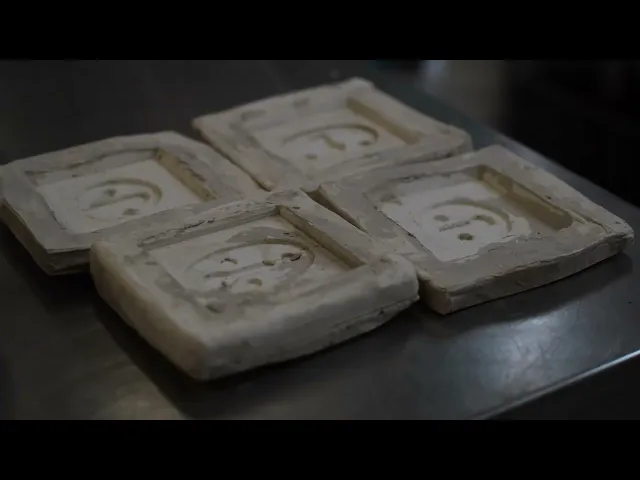
Stone recovered from the site is broken into fragments and powder before being introduced into the clay and glaze. After firing, traces of the original building remain visible across the object’s surface.


Made with care
Each LUM piece is slip-cast, finished and glazed by hand. Variations in the reclaimed material make every surface and object slightly different.
Create Your Own Combination
Built from three base forms, the Lum series shifts through stacking, creating different heights and combinations that move between vessel, container, and sculptural object. Rather than prescribing a single use, the series leaves room for interpretation, allowing the user to define how each piece is used.

